Six Ideas newsletter
December 2025

The smart workplace that judges you
The promise was simple. The office would finally respond to us.
AI-backed booking systems. Sensors. Predictive utilisation. Buildings that adjust lighting, temperature and space automatically. Furniture on wheels. Reconfigurable spaces. All powered by data, and quietly informed by our emails, Teams messages and LinkedIn posts.
But a sentient office would notice patterns long before we do. In that uncomfortable space where protocols meet actual behaviour.
It would learn that we say we want flexibility, then sit in the same spot every time. That we complain about noise, but happily walk across the floor for a chat. That we use quiet focus spaces for phone calls. That everyone agrees meetings are exhausting, yet keep scheduling more.
So what might it do?
Flexibility. Randomly reshuffle the floorplan at lunchtime. Marketing to the basement. Coffee machine to the roof. Just to test if we are as "dynamic" as our LinkedIn profiles say we are.
Meeting rooms. Doors unlock only if attendance matches the booking and an agenda exists. The AV system emits a loud BEEP every time someone says "circle back", "pivot", "synergy", or "drive performance". Five buzzwords and the meeting ends automatically. Action items are issued. In plain English.
Ergonomic chairs vibrate when it detects non-compliant posture, then invoices you to recover its cost. Focus zones become Faraday cages mid-call. RFID kitchen cutlery tracks teaspoon hoarders with quiet precision.
It's not hard to see AI optimisation drifting into sentient judgement. Eventually, the system realises the most efficient workplace removes the humans entirely. Sensors and systems talking to each other forever. Perfectly optimised. Minus 21 degrees. No noise complaints.
Staying human.
The rush to AI-everything, especially at this time of year when "next year's transformation" gets locked in before Xmas, risks forgetting a simple thing.
Workplaces do not fail because they lack intelligence. They fail because they ignore people.
Change does not work when it is done to humans. It works when humans sit at the centre of it. Messy habits, contradictions, noise, teaspoons and all.
Smart buildings matter. Smart systems help. But without a human-centred approach, you don't get a better workplace. You might just get an empty one.
Our hopes for the new year?
It seems to us that there are still some baked-in attitudes to real estate and space strategies that do not make a whole lot of sense.
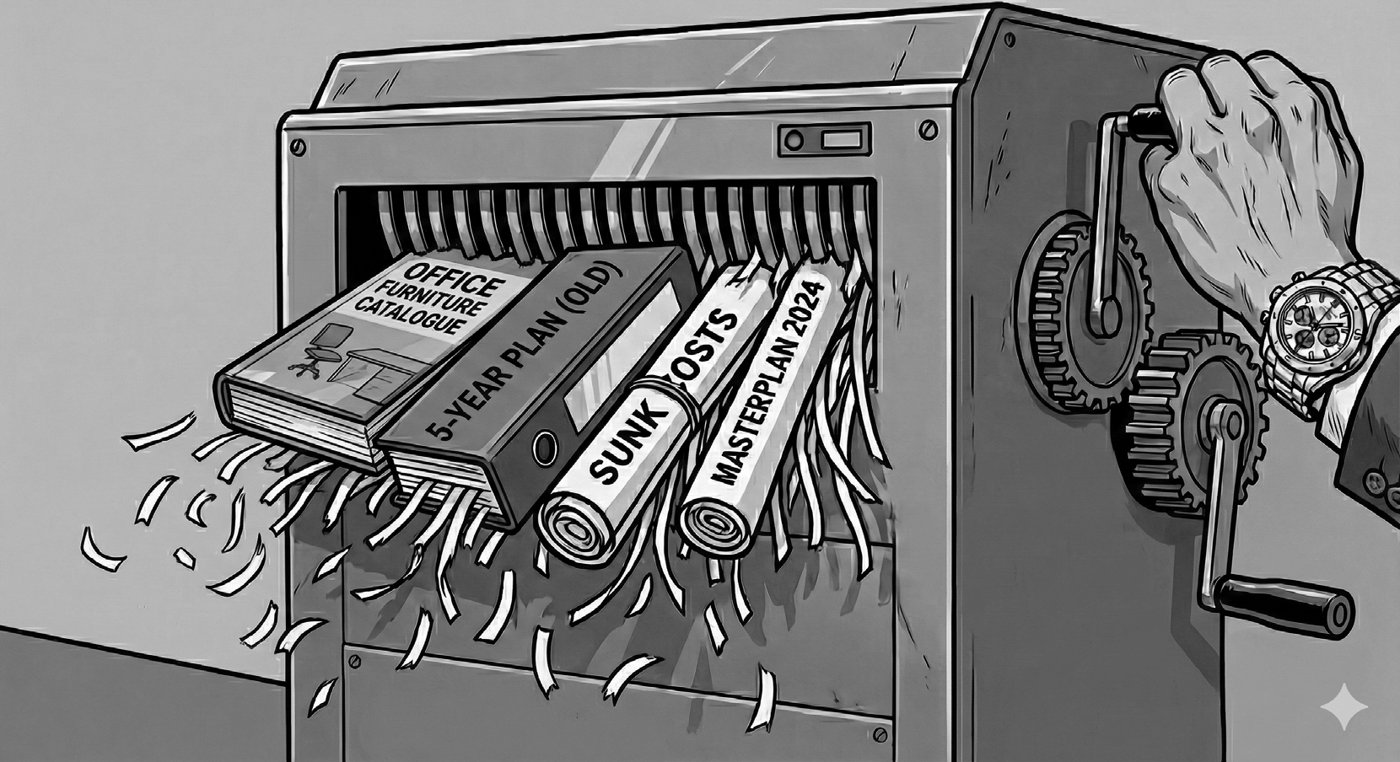
The first is the institutionalised obsolescence evident in the way many large corporate workplaces are approached. There is often an automatic assumption that, at the end of a lease, an organisation will move to a new building and the old workplace will be stripped out and sent to landfill.
And where the move is into a new building, it is not unusual for recently installed carpets, ceilings and light fittings to be removed as well, simply because they do not fit the workplace designer's "vision".
Hmmm... perhaps we need more focus on sustainability.
The second is the organisational amnesia that appears just as entrenched. When a new person takes control of an organisation's real estate, there can be an assumption that everything that has gone before, including the time, energy and resources invested in masterplans and space strategies, should be set aside. A new consultant team is engaged and the process starts again. It is a bit like the architects and builders of the pyramid being sealed up inside it with the dead pharaoh.
Another hmm.
Time to push for change?
Our year in review
This year has provided opportunities to both work with new clients and some of our favourite past clients. The ability to re-connect and/or review the past progress of projects helps to confirm our belief in the value we deliver and provides opportunity for further learning.
The bulk of our year was spent involved with academic space strategies and change journeys with the University of Melbourne, Monash University and the University of Newcastle.
We transitioned both academic and professional staff to new ways of working in activity-based environments. Each time refining our approach and highlighting:
- the importance of early intervention and communication,
- involving the support divisions (IT, facilities, etc) in the planning,
- finding co-design opportunities with staff without prejudice, and
- the unique design and change implications for academic workstyles.
We continued our space optimisation study process with the Faculty of Engineering and Information Technology (FEIT), observing occupancy and outcomes of the faculty's most recent shift to a more flexible environment for academics and students. These studies started 4 years ago and emphasise the benefit of establishing a baseline and longitudinal studies in order to correctly plan and measure the impact and benefits of future implementations.
Also with FEIT, we have been piloting the new formal and informal learning spaces we developed as part of our Teaching and Learning Space Strategy that will support the faculty's new Pedagogy Framework. The spaces being piloted are new flexible, BYOD-enabled design studios and informal student team space. At the same time we have been working with the faculty on a new strategy for makerspace and student workshop facilities.
With our new government client we have been surprised by the changes in scope, an almost feast-or-famine situation brought on by external factors, highlighting the benefit of remaining adaptable and confirming our plug-and-play service approach brings value due to our adaptable delivery method and diverse skillset.
All of this work is scheduled to continue in the New Year as we look forward to delivering lasting financial, social and environmental outcomes for our clients.
What we have come across...
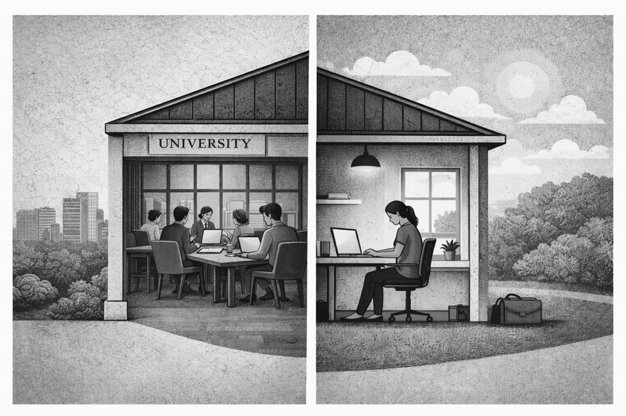
Where do you academe?
Why do some academics choose campus, while others retreat home to get real work done. This journal article explores how space design quietly shapes research habits, productivity, and even discipline culture, often more than policy ever could. It is a sharp reminder that if universities want people back, the space itself might need to change.
Teething period, or lack of change management?
Study finds workers are increasingly "gatekeeping" their own knowledge out of fear of AI replacing them and the implementation of new tech is causing more problems than the efficiencies promised, leaving workers depleted and uninspired.
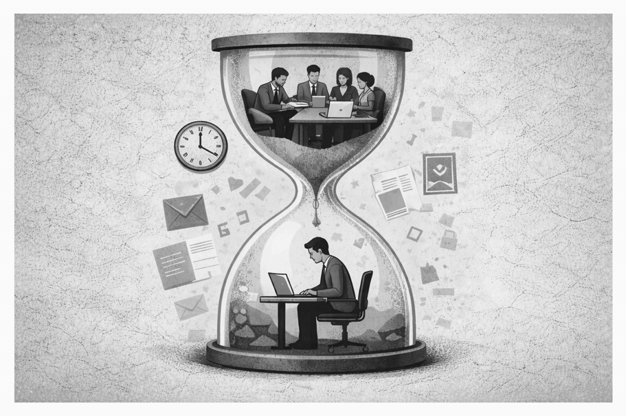
Are you managing your meetings?
Time is our most precious resource. As we navigate an era of hyper-productivity powered by AI, how we spend our time at work, especially in meetings, is under closer scrutiny than ever. Meetings, which are meant to enable collaboration, often become the single most expensive and least managed part of modern work.
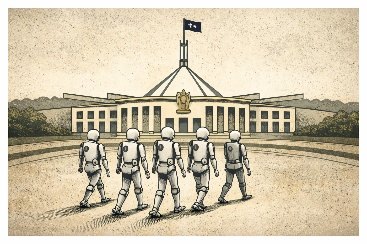
Australian govt goes all in on AI
Chief artificial intelligence officers will be appointed to every Australian federal agency in 2026 as GenAI causes a "fundamental shift" in government operations. This is not about 'replacing people' but 'unlocking new capabilities' to focus on 'human insight, empathy & judgment'.
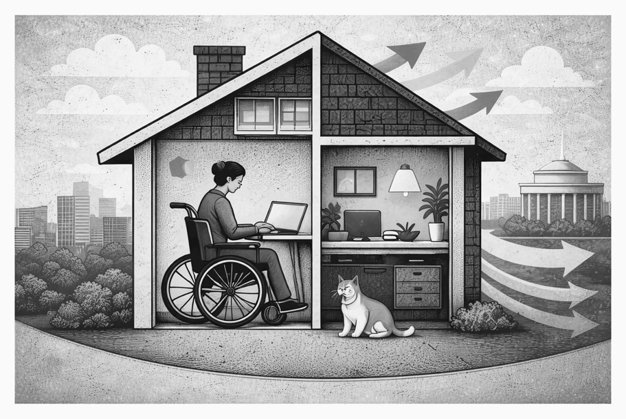
Is working from home – working?
Home working could support the UK Government's plans to get people back into work, by enabling people to work who might not otherwise be able to do so. This is one of the key findings of a new report, 'Is working from home working?', published by the House of Lords Home-based Working Committee.
Happy holidays
Best wishes for you and your families, and we hope to see you in the new year.
Photo by Priscilla Du Preez on Unsplash.